Every Leg of Your IPL Parlay Needed the Same Guy to Have a Good Night
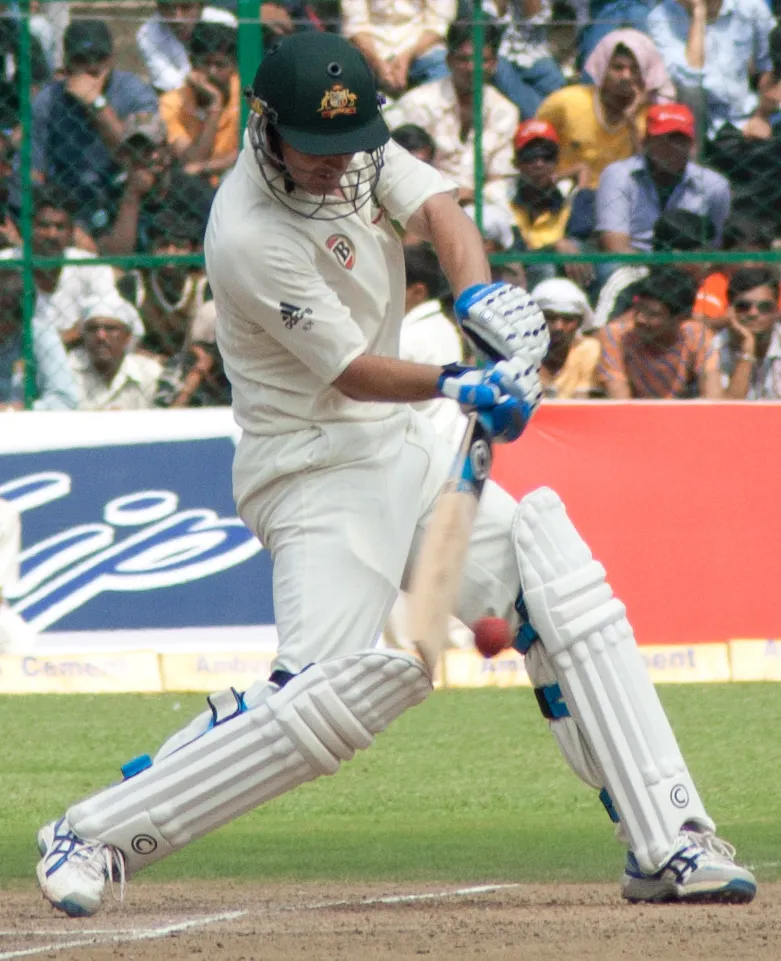
Photo: Pulkit Sinha from Mumbai, India, CC BY-SA 2.0, via Wikimedia Commons
You have run this play before. Three legs, +480, phone face-down on the counter, one eye on a scorecard you only half understand. Same-game parlays became the default way Americans bet football, and the habit followed everybody over to cricket the moment the IPL showed up on US sportsbooks.
The books are not mad about it. Not because anything is rigged, but because cricket's same-game markets are tangled in ways football's are not, and most bettors are still pricing them like three separate coin flips.
The multiplication problem
A parlay's advertised price is built by multiplying legs together. That math only works if the legs are independent — if one guy running hot doesn't change the odds of the other two. In the NFL, that's close enough to true that the sportsbooks just shade the price. A quarterback throwing for 300 yards and his receiver going over 100 are obviously linked, so the book adjusts downward and charges you for the privilege.
Cricket is a different animal. All 120 balls run through one innings structure. Team totals, individual scores, strike rates, wicket counts, and death-over runs are all downstream of the same twenty overs. Stack two of them and you have not built a three-leg parlay. You have built one opinion with extra paperwork.
The four clusters that die together
The opener's big night. 'Team total over 175' plus 'opening batter 40+ runs.' If the opener gets to 45 off 30 balls, the total is almost certainly fine. Two legs, one event. You paid parlay prices for a single bet.
The collapse bundle. 'Bowler takes 3+ wickets' plus 'match total under 320' plus 'opposition under 160.' All three are the same wish: the pitch misbehaves, or one lineup folds. They win together and lose together, and the book prices them like strangers.
The death-overs stack. 'Team total over 190' plus 'a specific finisher hits two sixes' plus 'team to win.' In a chase, those three are one sentence.
The fake hedge. This is the sneaky one. A bettor puts 'Team A wins' and 'Team A's star batter scores 50+' on the same slip and calls it a correlated parlay, believing correlation means safer. It doesn't. It means the slip is alive or dead as a unit. When the star falls early and the middle order scrapes to 150, both legs go down at once and there is no partial credit.
Yes, the books know
Sportsbooks run correlation engines on same-game markets. They are not handing you a multiplied price and hoping. What they are doing is repricing the slip and then pocketing a wider margin than they take on straight bets. Industry numbers put same-game parlay hold somewhere in the mid-teens to low twenties, against roughly four to six percent on a plain side or total.
That margin is the actual opponent. Not the pitch, not the toss, not the umpire's wide calls. You are paying a premium for the right to bundle things that were never really separate.
The one-cause rule
Here is the whole method, and it fits on a sticky note. For every leg after the first, ask: if this leg wins, does the previous leg almost certainly win too?
If the answer is yes, cut it. You are not adding risk or reward — you are adding price to a bet you already have.
Run your slip through that filter and watch how fast a four-leg parlay becomes a two-leg one. That is the point. A two-leg parlay across two different matches is a genuinely different product from a three-leg parlay inside one innings. The first one has two independent things that need to go right. The second has one.
What a defensible IPL slip looks like
It looks boring, which is the tell. Something like: a winner in the early match, a total in the night match, and — if you insist on three — a bowler prop from a team that isn't the one you're backing to win. Different games, different innings, different failure modes.
If you are absolutely committed to a same-game slip, cap it at two legs and pick two that can fail for opposite reasons: for example, a team winning while the match total stays under. That combination is not free — a low-scoring win is a specific kind of game — but at least it is a coherent opinion rather than the same opinion counted twice.
The part that stings
The correlation itself is not the villain. Correlation is a fact of cricket, and a sharp bettor can use it — a genuinely correlated parlay at a fair price is a fine bet. The problem is the price. You are paying a premium for the bundle and getting a discount on nothing.
So before you tap 'place bet' on a slip with three cricket legs and one heartbeat, ask the question. If all of them need the same guy to have a good night, you do not have a parlay. You have a single, expensive hunch.