Your 'Home Team' Plays in a Different Zip Code Every Week: The IPL's Fake Home-Field Advantage
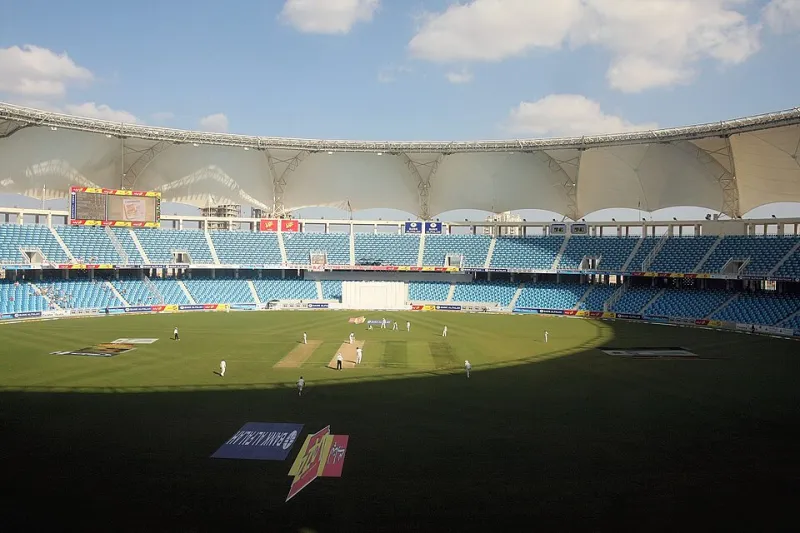
Photo: Dave Morton, Public domain, via Wikimedia Commons
Picture this: it's Sunday, the Chiefs are at Arrowhead, and the line already bakes in three points for the deafening crowd. That's home-field advantage. Now picture an IPL team called the "Mumbai" whatever playing half its schedule a thousand miles from Mumbai, on a pitch that behaves nothing like their home ground, in front of a crowd cheering for the visiting superstar. Welcome to the biggest handicapping trap in cricket betting.
If you're a US bettor weaned on the idea that "home" means something, the IPL is going to break your brain. Let's fix that.
There Is No Home Field. There Are Only Venues.
The IPL isn't a home-and-home league. It's a two-month traveling circus — think of it less like the NBA and more like March Madness, where the bracket locations change every year and nobody controls where they play. Franchises play most opponents once, at one venue or the other, and the scheduling grid shuffles every season.
The result? A team's "home stadium" might host them four times. Or, in seasons affected by logistics, security concerns, or outright relocations, barely at all. Some franchises have gone entire campaigns where their nominal home city was a rounding error in the schedule.
So when a sportsbook lists "Mumbai at Chennai" and your brain auto-applies home-court juice to Chennai, you're betting on a concept that barely exists.
What Actually Matters: The Pitch, Not the Postcode
Here's the lens that works: every IPL venue is its own biome.
- Chennai (Chepauk): Slow, grippy surface. Spinners feast, scoring dries up mid-innings, and chasing teams sweat. High-scoring American football types would call this a defense-friendly park.
- Bangalore (Chinnaswamy): The Coors Field of cricket. Short boundaries, altitude, batting paradise. Totals that would win finals elsewhere get chased down casually.
- Kolkata (Eden Gardens): Historically balanced, but the pitch personality has shifted over the years — sometimes dramatically mid-season.
- Jaipur, Mohali, Ahmedabad: Each has its own quirks, from dew-soaked evening chases to massive outfields that turn boundaries into doubles.
The data-backed play isn't "who's home." It's whose roster is built for this specific surface. A spin-heavy squad traveling to Chennai is a different animal than the same squad showing up in Bangalore. Treat venues like pitchers' parks in baseball — the stadium changes the matchup more than the jersey does.
The Travel Grind Nobody Prices In
India is not a compact region. A flight from Mumbai to Guwahati is longer than New York to Denver. Teams crisscross the subcontinent on a relentless cadence — play, fly, practice, play — and the cumulative wear shows up in late-season form slumps that casual bettors attribute to "choking."
When you're handicapping, check the travel legs:
- A team playing its third match in eight days across three time zones is a fade candidate, especially against a rested opponent.
- Back-to-back-ish scheduling (48-hour turnarounds) is common and brutal.
- Teams based in major hubs with big airports absorb travel better than the schedule's oddball stops.
If your book isn't pricing fatigue, that's your soft spot.
Dew: The Great Equalizer (and Line-Mover)
Here's a wrinkle American sports simply doesn't have. Night games in much of India mean heavy dew settles on the field in the second half of play, making the ball slick and hard to grip. Translation: chasing teams win dramatically more often in dew-heavy venues and months.
The captain who wins the toss almost always bowls first for this reason. If you're betting sides, the toss itself is a live, bettable event that can swing win probability by several points in the wrong venue-season combo. Track which grounds are dew-affected and adjust your second-innings expectations accordingly. It's the IPL's version of late-game wind at Wrigley — except it flips the whole matchup.
So How Do You Actually Handicap an IPL Venue?
A quick checklist to replace your dead home-field instinct:
- Look up the venue's recent scoring averages — last 10-15 IPL matches, not career history. Pitch personalities change.
- Check roster construction vs. surface. Spin quartet in Chennai? Good. Pace-only attack in Bangalore? Pray.
- Check the travel log for both teams over the prior two weeks.
- Check the forecast for dew — evening humidity matters more than rain chance.
- Ignore the nominal home team label entirely, except to note that a franchise playing at its actual home ground has, at most, a marginal familiarity edge — a few percentage points, not the three-point bump you'd give Lambeau.
The Bottom Line
The IPL's "home team" is a billing address, not an advantage. The real edges live in venue-specific pitch data, travel schedules, and the dew forecast — none of which show up on the odds sheet's team names. US bettors who unlearn home-field thinking fastest will be the ones quietly cashing tickets while everyone else pays the hype tax.
Bet the ground, not the geography. That's the luck you can actually control.