The First 36 Balls Are the Whole Ballgame: Why Your IPL Bet Was Decided While You Were Still at Work
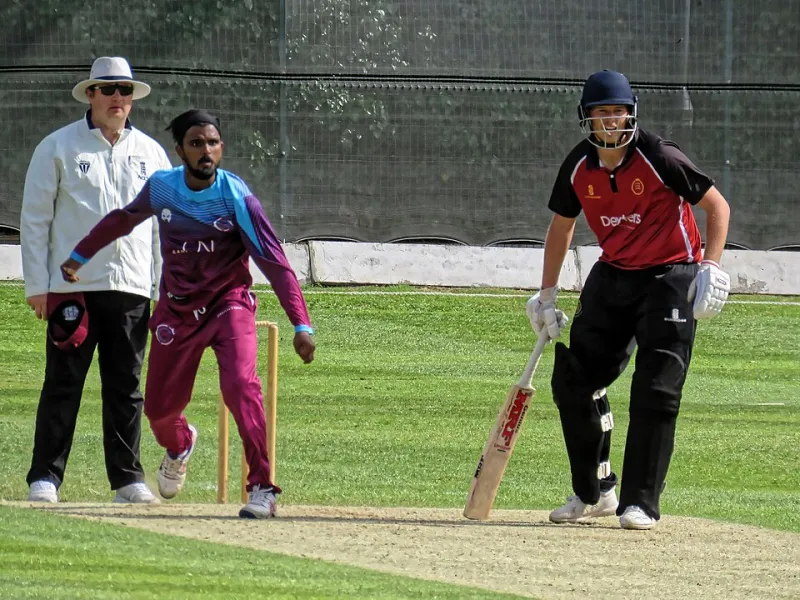
Photo: Acabashi, CC BY-SA 4.0, via Wikimedia Commons
Here's the thing nobody tells you when you're a US sports fan dipping a toe into the IPL: the game you think you're watching isn't the game that's being played.
You flip on the stream at a reasonable East Coast hour, catch the last 10 overs, see a chase come down to the wire, and think you've got a feel for what happened. You don't. You watched the trailer. The movie was decided in the first 36 legal deliveries — the Powerplay — and by the time you logged on, the box score had already written its ending.
Cricket's First Quarter That Actually Matters
American sports sell you the idea that nothing is decided early. NBA teams come back from 20 down. NFL teams score 28 in the fourth quarter. We've been conditioned to believe the first quarter is a feeling-out process.
The IPL Powerplay laughs at that conditioning.
During overs 1 through 6, field restrictions force only two fielders outside the inner circle, which means batters are legally invited to swing from their heels. It's the closest thing cricket has to a two-minute drill — except it happens at the start, and the damage it does (or doesn't do) ripples through the next 14 overs like a bad first quarter that no coach can coach his way out of.
The numbers back this up in a way that should change how you bet:
- Teams scoring 55+ in the Powerplay win at a dramatically higher clip — historically somewhere north of 60-65% depending on the season. That's not a trend; that's a cliff.
- Teams losing 3+ wickets in the first six overs face an uphill climb so steep that live odds rarely recover, even when the scoreboard looks salvageable.
- The sweet spot isn't max runs — it's runs per wicket. A team at 50/1 is in a better position than a team at 65/3, and if you're reading raw score alone, you're mispricing the game.
You're Not Live Betting. You're Late Betting.
There's a particular delusion among American bettors new to cricket: the idea that tuning in mid-game gives you an 'information edge.' You watch the current batters, gauge the pitch, make a read.
But if you're skipping the Powerplay, you're not reading the game — you're reading its hangover. The middle overs aren't a fresh contest; they're the consequence of one. A batting side that got hammered early is playing scared. A bowling side that struck twice in the Powerplay is attacking a wounded lineup with a plan. The 'live' situation you're evaluating is a puppet show, and the Powerplay was the hand.
If you want a football analogy: imagine betting the second half of an NFL game without knowing the first-half score, the injury report, or which quarterback lost his confidence. That's you, watching overs 7 through 15 cold.
The Three Powerplay Stats That Actually Predict Outcomes
Not all early-game numbers are created equal. If you're building a betting or fantasy model (and you should be — check our Fantasy 101 archive for the basics), these are the ones that move final results:
1. Powerplay wickets, not runs
A big score with no wickets lost can be a mirage — dew comes in, the pitch flattens, and 60/0 becomes a par score. But 2+ early wickets expose the middle order, force a rebuild, and compress the scoring for 10 overs. Wickets are the leading indicator. Runs are the lagging one.
2. Dot ball percentage against top-order batters
The best Powerplay bowlers don't just take wickets — they string together dot balls that create pressure, which creates false shots, which creates wickets. A bowler with 60%+ dots in the first six overs is quietly winning the game even if the scoreboard says otherwise.
3. Boundary conversion on the chase
Chasing teams in the IPL know their target. When a chase is behind the required rate by the end of the Powerplay, the required run rate starts compounding like credit card debt. Track how often the chasing side clears 45-50 in the first six — it's one of the most reliable win-probability signals in the sport.
What This Means for Your Fantasy Roster
Fantasy managers, this cuts both ways. Your Powerplay bowlers are the most underpriced assets in IPL fantasy — they get four overs with field restrictions, the highest wicket-taking probability windows in the format, and they're usually cheaper than the death-overs 'closers' everyone overbids for. If your draft strategy ignores overs 1-6, you're leaving points on the table every single match.
Meanwhile, the flashy finishers you're paying premium prices for? Their production is often capped by a Powerplay collapse they had nothing to do with. You're buying the fourth-quarter hero without checking whether his team even shows up to a fourth quarter worth playing.
Set the Alarm or Accept the Loss
Look, we get it. The IPL starts at inconvenient hours for US viewers, and most of the marketing pushes the dramatic endings. But if you're betting these games or managing a fantasy roster, the honest truth is this: the most valuable 40 minutes of an IPL match happen before most of America has finished lunch.
Either watch the Powerplay or find a stats feed that tells you what happened in it. Because by the time the broadcast gets to the part that looks exciting, the part that actually mattered is already in the books — and so is your bet.