Your Bench Has a Job Now: Drafting the IPL's Impact Player Before Your League Catches On
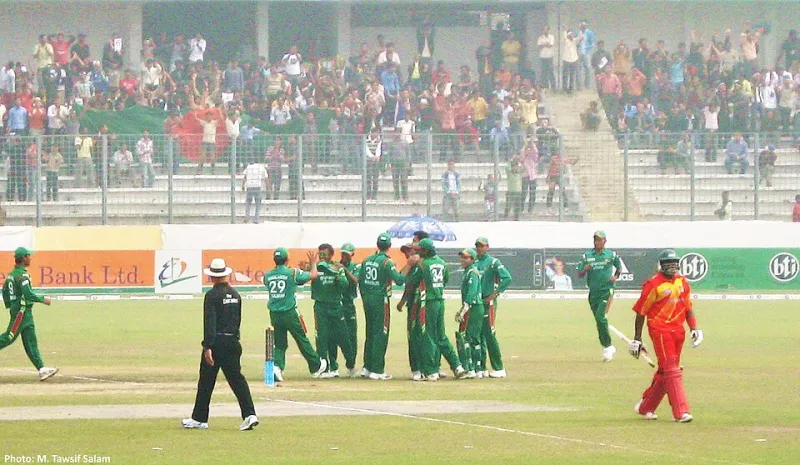
Photo: Mohammed Tawsif Salam, CC BY-SA 3.0, via Wikimedia Commons
Draft day has a rhythm every fantasy manager knows. Eleven starters, a couple of bench fliers, and then forty minutes of arguing about whether the last pick should be a backup wicketkeeper or a fifth bowler nobody will ever start.
The IPL has quietly changed what that last pick is worth. Since 2023, every team has had an Impact Player — one tactical substitute who can be activated mid-match, usually a single-skill specialist. In real cricket, that is a coaching decision. In fantasy, it is a roster spot nobody is pricing properly.
What the rule actually gives you
Each team names up to five substitutes at the toss. One of them can be brought into the match — before the start of an innings or between overs — and the player he replaces is done for the day.
Coaches have settled into two patterns. If a team is defending, the Impact Player is usually a specialist death bowler with no batting responsibility. If a team is chasing, it is usually a hitter who would never otherwise make the XI. Some teams flip based on the toss. Some just use the same guy every week.
For fantasy purposes, that means a player who technically 'did not start' can rack up four overs at the death or a quickfire twenty at a run rate your league scoring loves.
Finding the likely Impact subs before the season does
You do not need inside information. You need to look at how each squad's eleven is built.
The part-time fifth bowler. If a team's fourth seamer is really a batting all-rounder who bowls two overs, they will almost always carry a specialist quick as the Impact Player. That specialist is a fantasy starter in disguise — a full four overs, likely the eighteenth and twentieth.
The No. 7 who can't bat. A team that bats a bowler at seven is screaming for a hitter off the bench. In a chase, that Impact batter may walk in with six overs left and a license.
Chasing versus defending splits. Track it in the first two weeks. Plenty of sides use a different substitute depending on the toss, which turns the Impact Player into a coin-flip asset. Those are worth less than a team that uses the same specialist every single game.
One-skill, no-defense players. The typical Impact Player has an obvious hole: a batter who doesn't field, a bowler who bats at eleven. That's not a knock on the player — it is the reason the rule exists.
Pricing them on draft day
Here is the honest math. An active-week Impact Player might appear in roughly ten to twelve of fourteen league games, and he might not be used at all in a lopsided result. So you do not pay full starter price.
But you also should not pay bench-flier price, which is what your leaguemates will do. A death bowler getting four overs at the back end is close to a full starter in wickets and economy. A finisher getting ten balls a game is a genuine asset in a scoring system that rewards strike rate.
A workable range: knock 25 to 35 percent off what you'd pay for a comparable starter. More than that and you are buying a lottery ticket. Less than that and you are overpaying for a conditional role.
Why your bench needs one designated finisher
Here is the practical lineup rule. Carry at least one bench player whose entire job is to be the guy who comes in when his team chases — a pure hitter, ideally on a squad with a shaky middle order and a captain who likes to be aggressive at the toss.
Then set your lineup with the toss in mind. If your league allows Monday-morning changes before a night game, a chasing Impact batter can slot in ahead of a plodding accumulator on a team that is batting first and grinding.
The trap: the Impact Player who never gets used
Not every side actually uses the rule. Some teams have such a balanced eleven that the substitute is decoration, burned in the nineteenth over for a pointless cameo. That happens most with teams whose top six is set and whose fifth bowler is a genuine all-rounder.
Two red flags: the same player is listed as a substitute every week but rarely activated, and the team's XI already has two viable hitters at seven and eight. Avoid those. The rule rewards specialists on teams with obvious holes — not well-rounded squads.
The takeaway
Your league probably scores 11 starters and treats the bench as an afterthought. The IPL does not. Every franchise now plans its game around a substitute who never appears in the team photo.
Pay attention to the toss, watch who gets listed as a substitute in week one, and grab the specialist before anyone else in your league notices that the twelfth man is on the field.